

mzgiaconte @Pixabay
Johannesburg
Johannesburg's urban landscape is deeply
marked by the legacies of Apartheid. Socio-economically, it presents stark
divides between affluent suburbs and underdeveloped informal settlements or
“townships”, illustrating the extremes of wealth and poverty. These disparities,
combined with its ecological transformation into the 'World’s Largest Urban
Forest', make Johannesburg a compelling subject for understanding the interplay between biodiversity and socio-economic dynamics.
THANK YOU UrbanBEE SOUTH AFRICA!
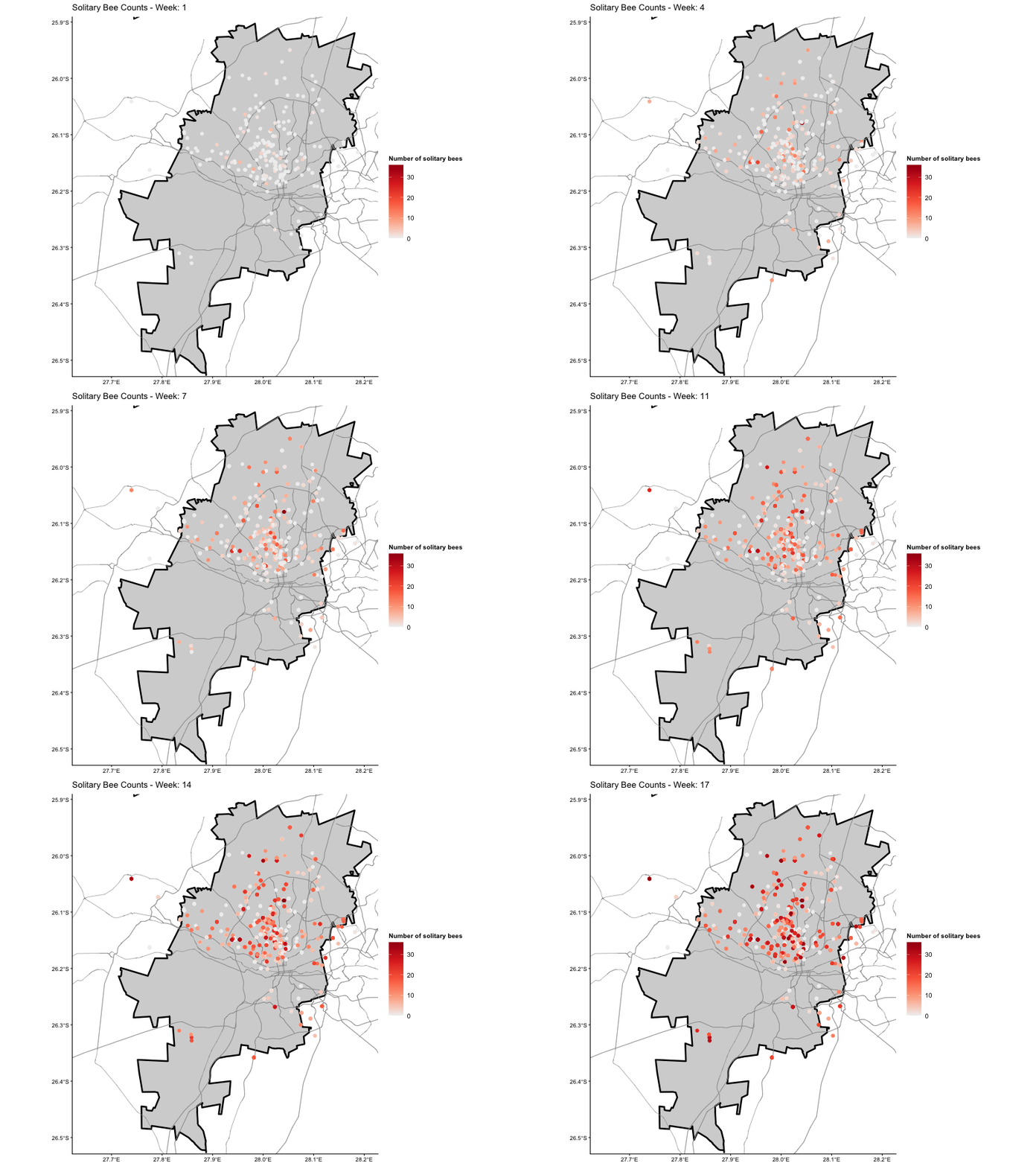
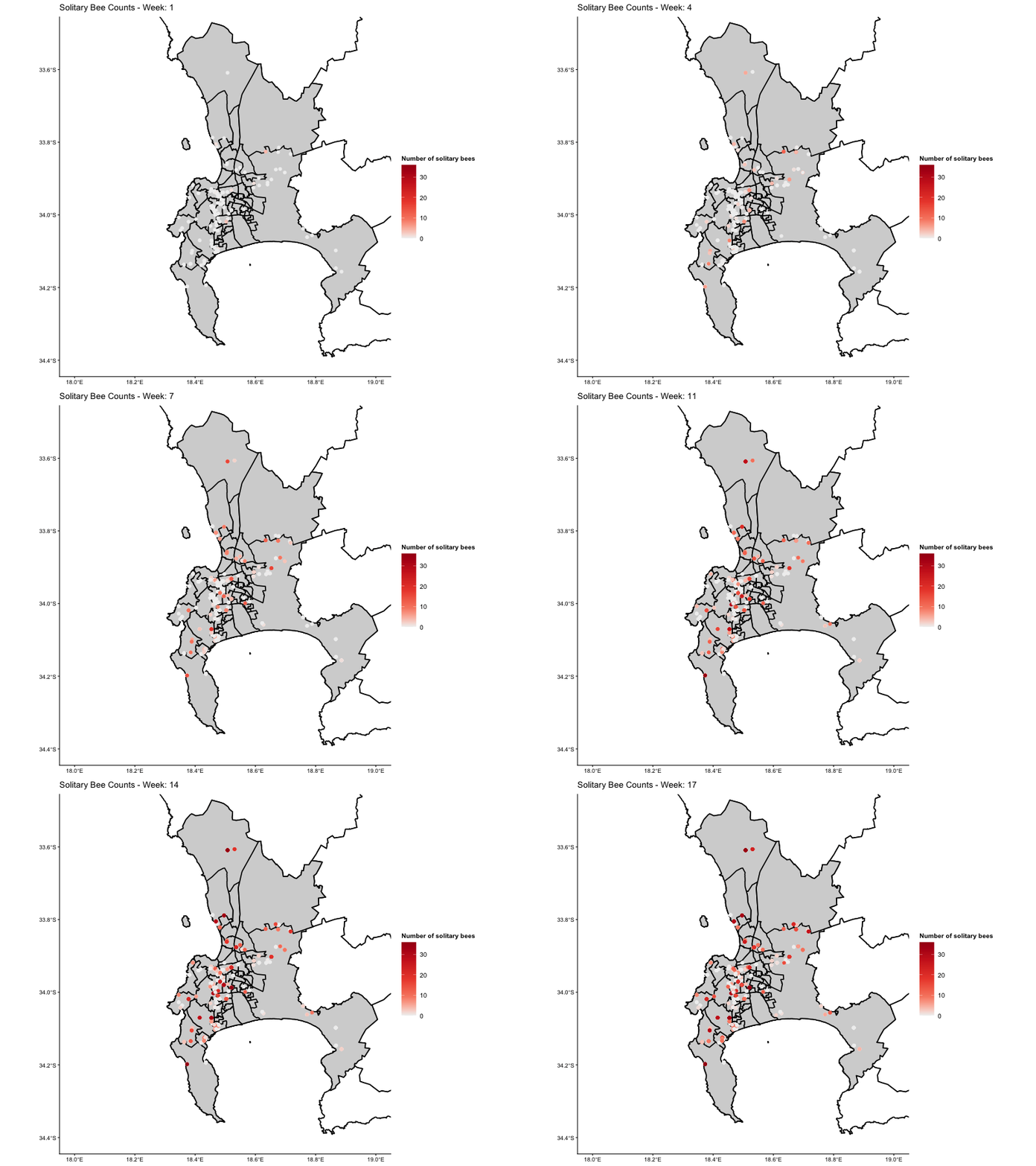
Over the course of 17 weeks, UrbanBEE South Africa managed to capture a remarkable pattern of solitary bee activity across the cities of Johannesburg and Cape Town thanks to the incredible support and contributions of our citizen scientist volunteers.
While we are certainly looking forward to analysing this data and sharing it with you, for now we an show you animated heat maps for each city, depicting the increase in occupation across bee hotels from when we started the project up until now!
Thank you UrbanBEE South Africa - we hope you had as much fun as we did watching our cities become abuzz with life 🐝
Johannesburg:
Cape Town:
HOTEL SETUP
Now that you have your hotels, it is time to hang them up. Please ensure that your hotel is:
-
At least 1m off the ground - eye-level is best
-
Hung in a dry place - the wood is untreated and the rain will make the wood swell
-
Hung in a place that receives morning sun so your bees can warm up - please avoid an area with too much sun or the bees will get too hot

@AChen

@Wix
DATA SUBMISSION
Once a week, you will receive a weekly Google Form link (by email and WhatsApp) to upload a photo of your hotel.
-
To upload photos, you will need a Google/Gmail account. If you do not already have one, you can create one for free here.
-
These weekly photos are our primary source if data. While it is fine to miss a week occasionally, please try to upload regularly.
HOW TO TAKE A GOOD PHOTO
For the data to be useful, the photos need to be clear and well lit:
-
The full frame should show the entire hotel, including the number at the top.
-
Take the photo straight on, not at an angle.
-
Morning or afternoon light is best. If the hotel is in shade, most phones will adjust automatically.
-
Feel free to practise a few shots. If you are having trouble, please email us at myurbanbee.jhb@gmail.com.
Below are some examples of good and poor photos:
 The entire hotel is visible (including the hotel number). And the photo is taken straight on and not at an angle. |  The image is incorrectly taken and not all the holes are visible. |  The image is incorrectly taken and the holes are viewed from a bottom angle. |
|---|---|---|
 The image is taken too far away from the hotel and the bees inside the hotel are hard to view. |  Image was not focused and is unclear making it hard to see the holes. |  Incorrect image taken with inconsistent lighting. Try take it when it has full morning or afternoon light. If the hotel is in the shade, your phone should automatically adjust. Partial shadows should be avoided. |
 Incorrect image taken. The image is skew and not taken straight on. |
WHAT TO LOOK FOR
We are documenting the rate at which the bee hotels in different areas fill up with Solitary bees. Thus we are interested in the holes that have been occupied by a Solitary bee. These can be identified by nest building materials sticking out of the hole, a seal over the hole, or by actually seeing a Solitary bee coming in and out of the hole.
Different species of Solitary bees use different materials to build their nests. These include mud, leaves, plant fibres, resin, a cellophane-like material etc. While the bees are building their nests they are making separate chambers within their hole for each of their offspring to grow in. The chambers will be filled with provisions (pollen, nectar) for the offspring and they will be separated by the building materials mentioned above. When the female Solitary bee has completed her nest and has laid all her eggs she will then seal off the hole for the winter months. The hole will also be sealed with those same building materials. Thus, you may see the holes in the bee hotel at different stages of the nest building process. It may not always be easy to know if a hole is occupied in the early stages. We recommend spending some time each week just watching your bee hotels. Not only will it allow you to fully enjoy your bee hotel and gain further understanding of these wonderful Solitary bees but it will also help you identify which holes the bees are living in. Remember that Solitary bees come in all sorts of sizes, body shapes and colours so they may not always resemble a "typical bee".
Below are some examples of what to expect:


